We Built AYITI 2100 Like Architects, Not Dreamers
Eight guardians. One visual system. Zero nostalgia. Inside the method behind Haiti's boldest Afrofuturist art collection.
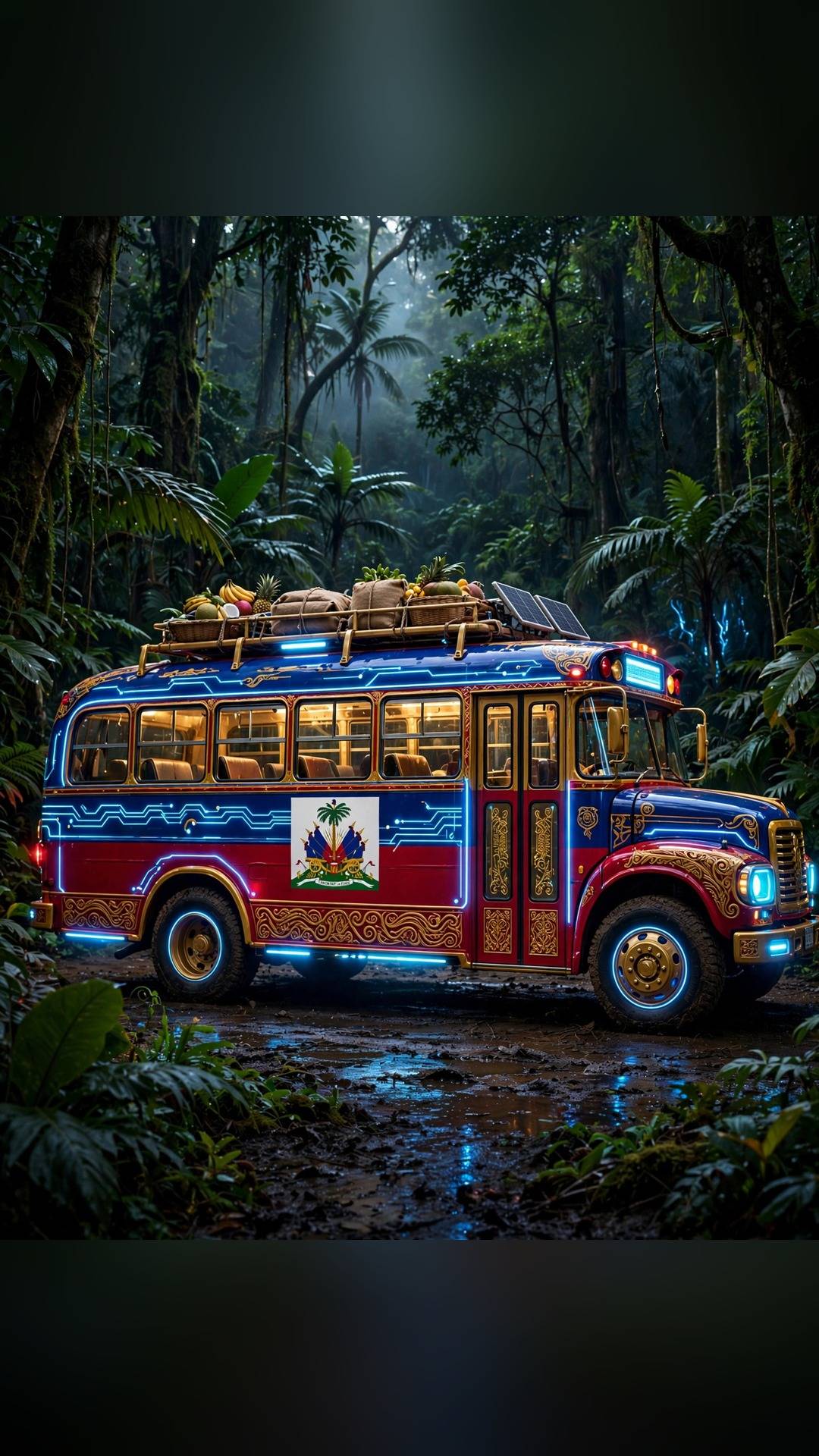
Every art collection has a method, whether it admits it or not. Ours is deliberate enough to write down. AYITI 2100 — eight original Afrofuturist artworks imagining Haiti three generations from now — was built like architecture: constraints first, decoration never. Here is how, and why it matters for anyone who cares about Haitian digital art.
Rule one: archetype first, image last
Most AI-era art starts with a prompt and hopes for magic. We started with people. Each guardian began as an archetype from real Haitian life — someone you know, someone your grandmother knows. The trickster. The bearer. The provider. The connector. The voice. The grower. The trader.
Only after the archetype was fixed did we write the future: what does the machann become when markets run on networks? What does the tanbouyè become when rhythm is bandwidth? What does the bourik — the donkey that carried Haiti's economy — become when endurance itself is power?
The image came third. Always third. A guardian with a weak story is decoration. A guardian with a true story is mythology. We were building mythology.
Rule two: three generations, no more, no less
Why 2100? Because distance is a design tool. One generation into the future is just tomorrow with better phones — boring. Ten generations is pure fantasy — weightless. Three generations is inheritance. Far enough to transform, close enough that your grandchildren will live in it.
That distance forces honesty. You can't hand-wave three generations; the viewer will check your work against their own grandchildren. Every guardian had to feel like a plausible descendant of someone alive today — the future as family resemblance, not costume party.
Rule three: no nostalgia, no headlines, no clichés
This was the hard constraint, and the most important one. No beaches-as-escape. No poverty-as-aesthetic. No generic "island vibes." No looking backward dressed up as looking forward.
Haiti's image abroad is a tug-of-war between two clichés: the paradise postcard and the disaster headline. Both erase the real country. AYITI 2100 refuses both. The collection's Haiti is neither resort nor ruin — it's a civilization with a past it owns and a future it's authoring. The hardest thing to draw, it turns out, is a Haiti that is simply itself, three generations on.
Rule four: one visual system, eight voices
Look at all eight guardians together and you'll feel the system before you can name it: Atlantic blues, earth reds, gold light — the flag's DNA built into the material, not applied as decoration. Deep backgrounds that make the figures glow on modern phone screens. Portrait-first compositions, designed for the lock screen rather than shrunk to fit it.
But a system isn't a straitjacket. MAKAK's electric blues feel nothing like TANBOUYÈ's deep reds. MACHANN's golds play against BOURIK's steel. Same language, different sentences. That's what makes it a universe instead of a template.
Rule five: honesty about the tools
AYITI 2100 is created with AI-assisted tools, then curated, refined, and finished by the studio. Every composition choice, every color decision, every story beat passes through human hands and Haitian eyes before it ships.
We say this plainly because the diaspora deserves honesty from its artists — and because the method is the point. The tools are new. The judgment is old. A camera didn't make photographers obsolete; it made direction matter more. Same here. What you're seeing isn't generated and shipped. It's directed.
Why phone-first isn't a compromise
Some artists treat the phone screen as a lesser canvas. We treat it as the primary one. The average person checks their phone over a hundred times a day — more than any museum, more than any feed. A Haitian phone wallpaper isn't a downsized artwork. It's the artwork in its native habitat.
So the guardians were composed for the lock screen from the first sketch: bold silhouettes that read in half a second, centered subjects that survive the clock overlay, colors tuned for OLED glow. Design for the screen people actually look at, and the art stops being something you visit. It becomes something you live with.
The universe is designed to grow
Eight guardians guard the beginning, not the end. The system — archetypes, three generations, one visual language — is built to expand: new figures from Haitian life, new futures from new angles. A healer? A teacher? A builder of bridges, literal or otherwise?
The community forming around the collection will help decide. Tell us which guardian you'd add to the pantheon — and meanwhile, carry the first eight with you: the AYITI 2100 Wallpaper Pack, $9, instant download.
Architecture, not dreams. That's how you build a future that lasts.