The Citadelle Laferrière Is the Greatest Fortress You've Never Visited
High on a Haitian mountaintop sits a fortress built by a king who refused to be enslaved again. Go before the crowds do.
High on a mountaintop in northern Haiti sits the largest fortress in the Americas — a stone giant built by a king who had been enslaved and refused to ever be enslaved again. The Citadelle Laferrière has stood for two centuries. Most of the world has never heard of it. That needs to change.
Built by freedom, for freedom
After Haiti won its independence in 1804, its leaders knew France might try to take it back. Henri Christophe — a formerly enslaved man who became a general of the revolution and then King of northern Haiti — ordered a fortress built on the peak of Bonnet à l'Évêque mountain, near Cap-Haïtien. Construction began in the years after independence and continued for over a decade.
The logic was defiance made stone: if the French returned, they would find 20,000 soldiers waiting behind walls that cannon fire couldn't crack, with enough provisions to outlast any siege. Haiti would never be re-enslaved. The mountain said so.
What you'll find at the top
The Citadelle is not a ruin — it's a presence. Massive walls rise from the peak, with hundreds of cannons still lined along the ramparts, many of them bearing the royal crests of the European powers they were captured from. The irony is delicious: the empire's own artillery, turned against it, still pointing at the sea.
Inside: courtyards, barracks, cisterns, and the palace quarters. The views stretch from the mountain ridges to the Atlantic — on a clear day you can see for miles in every direction, which was exactly the point. Nothing approaches this mountain unseen.
In 1982, UNESCO named the Citadelle — along with the nearby Sans-Souci Palace and the Ramiers buildings — a World Heritage Site, recognizing it as a universal symbol of liberty. The world heritage list has thousands of entries. Few of them were built by people who freed themselves.
The king who built it
Henri Christophe's story reads like the Citadelle itself — improbable and unbreakable. Born enslaved, he fought in the revolution, rose to general, and after independence ruled northern Haiti, crowning himself King Henry I in 1811. He built not just the Citadelle but palaces too, including Sans-Souci at Milot — a court meant to prove that Black sovereignty could match any monarchy on earth in splendor.
Christophe was a demanding, often harsh ruler — history doesn't flatten him into a saint. But the Citadelle is his argument in stone: that freedom, once won, would be defended at any cost. When his reign ended in 1820, the fortress stayed. Arguments in stone outlast the men who make them.
Why it matters beyond Haiti
Every nation has monuments to its wars. The Citadelle is something rarer: a monument to a war against slavery itself, built by the victors, still standing on the ground they freed. There is no equivalent in the Americas. The fortresses of the colonial powers dot the Caribbean — San Juan, Cartagena, Havana — all built to protect empire. The Citadelle was built to defeat it.
That's why the site hits visitors the way it does. You don't tour the Citadelle the way you tour a castle. You climb it — the road up is steep, and the last stretch is on foot or horseback — and the climb is part of the meaning. Freedom wasn't convenient. Neither is the view.
Go before the crowds do
Here's the honest travel note: the Citadelle deserves ten times the visitors it gets. The infrastructure around it is modest — local guides, horses for the steep ascent, small vendors at the base. That's part of the magic now, and it won't last forever. Places this significant don't stay quiet.
Base yourself in Cap-Haïtien, Haiti's historic northern city, hire a local guide (non-negotiable — the guides know the mountain and the stories), and give the Citadelle a full day. Pair it with the Sans-Souci Palace ruins at Milot below. Go in the cooler, drier months if you can. Bring water, good shoes, and respect.
Carry the mountain with you
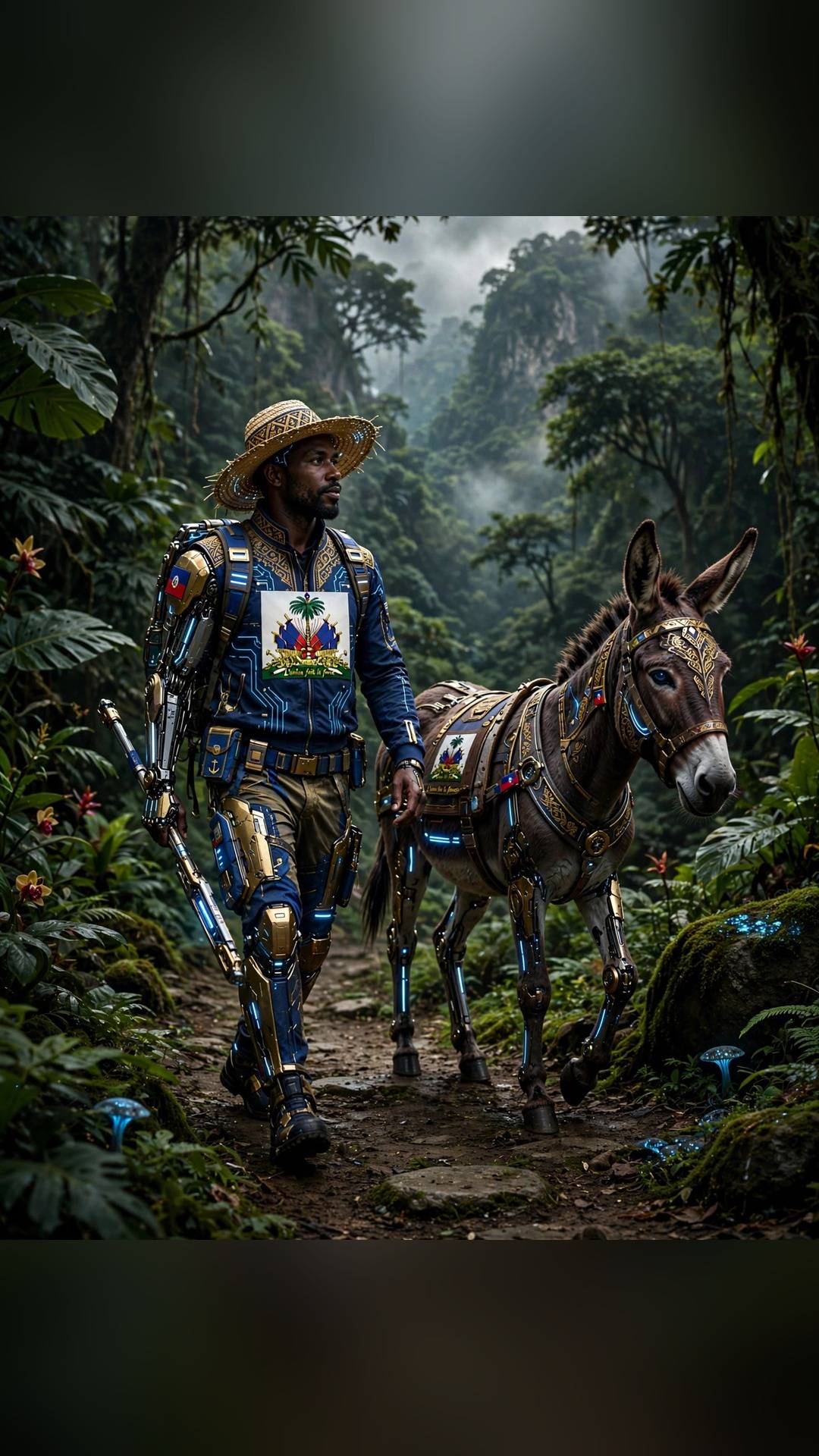
Can't get to the mountaintop yet? Carry the spirit of it. The AYITI 2100 guardians were built from the same defiance — BOURIK 2100, the bearer armored in endurance, carries the Citadelle's logic: never again, by design. Get all eight guardians as Haitian phone wallpapers — $9, instant download.
The greatest fortress in the Americas is Haitian. Go see it. And until you do, carry a piece of its mountain in your pocket.