Afrofuturism Was Born in Haiti in 1804. The World Just Hasn't Caught On.
Before the word existed, Haiti lived it: enslaved people imagining a free future — then building it. This is Afrofuturism's true origin story.
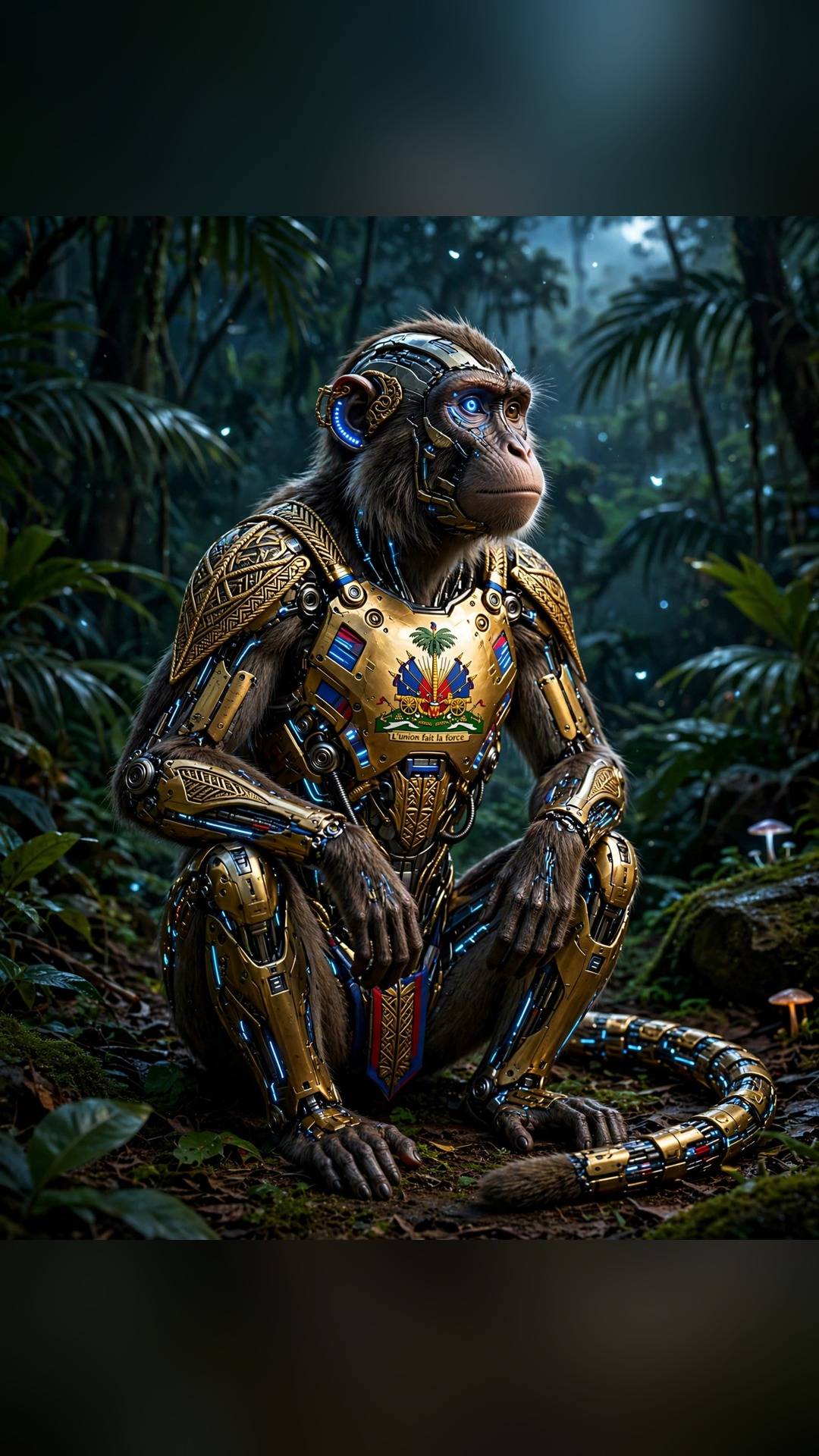
Afrofuturism — the movement imagining Black futures through art, music, and story — has an origin story most of its fans have never heard. It didn't start with a novel or a record. It started with a revolution. In 1804, enslaved Haitians looked at a future nobody else could see — a world without slavery — and built it with their hands. That is Afrofuturism before the word existed.
The critic Mark Dery coined the term "Afrofuturism" in 1993. But the practice is decades older, and its deepest root is Haitian soil.
The original Afrofuturist act
Strip Afrofuturism to its core and you get one claim: Black people don't just inherit futures — they author them. Every spaceship, every android queen, every reimagined tomorrow in the movement is an argument that the future belongs to those bold enough to picture it.
Now read Haiti's founding through that lens. In 1791, enslaved Africans rose against the most profitable slave colony on earth. Against France, then Spain, then Britain, then France again under Napoleon — the greatest military machine of the age. They won. In 1804, Haiti became the first free Black republic in history.
That wasn't just a military victory. It was an act of radical imagination. Nobody alive had seen a free Black nation. The Haitian revolutionaries pictured one anyway — then made it real. If that isn't Afrofuturism, the word means nothing.
The movement, in brief
The canon most people know: in the 1950s, jazz visionary Sun Ra claimed he was from Saturn and built a cosmology of Black space travel through music. In the 1970s and 80s, Octavia Butler wrote novels where Black women navigated time travel and alien worlds with clear-eyed pragmatism. Jean-Michel Basquiat — of Haitian and Puerto Rican descent — put crowns on Black genius and hung it in the world's great galleries.
Then the breakthroughs: Janelle Monáe's android alter ego, Beyoncé's Lemonade visuals, and 2018's Black Panther, which put Afrofuturism on a billion screens through Wakanda — a nation never colonized, where tradition and technology grew up together.
Powerful work. But notice the gap: the movement's spiritual homeland — the first nation to live its central idea — kept getting left out of the story.
Why Haiti kept getting erased
The erasure wasn't accidental. After 1804, the world's powers punished Haiti for its freedom: France extorted a crushing indemnity in exchange for recognition, the US refused to recognize Haitian independence for decades, and the story told abroad shrank the revolution to a footnote. A nation that proved Black liberation possible was treated as a cautionary tale instead of a blueprint.
Afrofuturism inherited that blind spot. The movement talked about Wakanda — a fictional uncolonized nation — while the real uncolonized-by-victory nation sat in the Caribbean, waiting to be remembered. Fiction got the glory. History got the silence.
AYITI 2100: closing the circle
AYITI 2100 is our correction. Eight original artworks — MAKAK, BOURIK, PECHÈ, TAP-TAP, TANBOUYÈ, KILTIVATÈ, MACHANN — each one rooted in Haitian daily life and projected three generations into the future.
This isn't Haiti borrowing Afrofuturism. This is Afrofuturism coming home. The trickster, the bearer, the provider, the connector, the voice, the grower, the trader — archetypes drawn from real Haitian life, carrying the culture into a future it authors for itself. The movement's founding nation, finally holding the pen.
What makes it Haitian — not generic
Plenty of "Afrofuturist" art is interchangeable: gold here, neon there, vaguely tribal everywhere. AYITI 2100 refuses that. Every guardian is specific — the tap-tap bus is Haitian, the madan sara is Haitian, the tanbou drum is Haitian. The future imagined here couldn't come from anywhere else, because it grows from a particular soil.
That specificity is the whole argument. Afrofuturism at its best isn't decoration — it's a culture operating its own future. Haiti earned the right to that future in 1804. AYITI 2100 is what it looks like when the invoice comes due.
See the future Haiti authored
Explore all eight guardians in the gallery, or carry them with you — the AYITI 2100 Wallpaper Pack puts every artwork on your phone as a high-resolution Haitian phone wallpaper: $9, instant download.
The future was being imagined in Ayiti before the word Afrofuturism existed. It's about time the movement remembered.